Walter & Group...
>From Mack Martin:
Gordy:
This is some work that we did a couple of years ago. It was presented at the CE programs in Atlanta two years ago and in Florida last year. The measurements are made with a calibrated screen on an IPad and the loops are quite easy to measure at any point in the loop as it unrolls. A copy of the PP program is attached in a PDF format.
Regards…
Mack
~~~~~~~~~~~~~~~~~~~~~~~~~~~~~~~~~~~~~~~~~~~~~~~~~~~~~~~~~~~~~~~~~~~~~
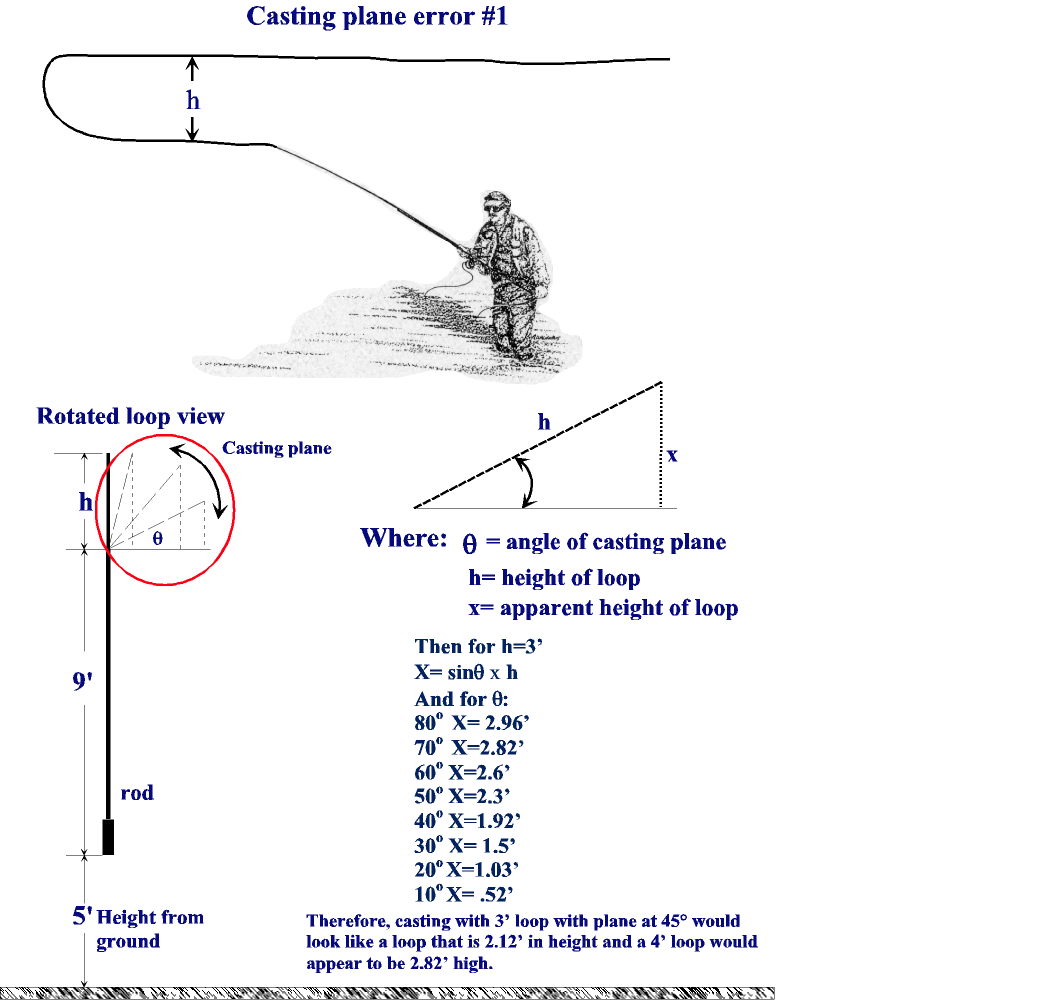
Errors associated with observation
• Location of casting plane away from vertical
• Angle of observation between loop and examiner
• Ability to analyze a transient event
~~~~~~~~~~~~~~~~~~~~~~~~~~~~~~~~~~~~~~~~~~~~~~~~~~~~~~~~~~
[GH] Mack,
I do recall this. Excellent study!. Tried to include your pdf attachment, but my server wouldn't allow all the bytes.
I understand you are going to help by sending us a link to the study so we can see the photo examples.
At first, I was reluctant to introduce it because of the math required to actually use the technique as being intimidating to non-scientific folks as well as the likely reluctance of most examiners to use it while testing.
It says a lot, however, especially with the way a loop can appear to be in size depending upon the angle of observer to it and the angle of the loop plane.
This was the reason for the recommendation by the MCI Testing Committee to simplify things by having the candidate form loops while casting in the vertical or near vertical rod plane for Task 1 (Demonstration of loop control). Most examiners will judge approximate loop size from the observer's eye height with the observer standing off to one side. (One member of the examining team may be behind or before the caster to help judge whether the loops legs are reasonably parallel from side-to-side.)
Gordy
~~~~~~~~~~~~~~~~~~~~~~~~~~~~~~~~~~~~~~~~~~~~~~~~~~~~~~~~~~
~~~~~~~~~~~~~~~~~~~~~~~~~~~~~~~~~~~~~~~~~~~~~~~~~~~~~~~~~~
To be removed from this mailing list, please click here to unsubscribe