Walter & Group...
I will be away from my Group MailList Controller for a few days. Gordy
~~~~~~~~~~~~~~~~~~~~~~~~~~~~~~~~~~~~~~~~~~~~~~~~~~~~~~~~~~~~
A request from Mark Milkovitch :
Gordy,
I have a favor if your time allows. I?m doing a small
piece here at Silver Creek Outfitters on our CICP program and I wanted to
describe Mel Krieger?s early role in that program. I noticed your comment
in the Fall 2008 tribute to Mel in the Loop but I have not found any further
info about his role in starting the program. I would appreciate any input
you can provide. For many years Mel would spend a week with us here in Sun
Valley doing casting classes. He was well known by many in the community and
they would be pleased to see his contribution acknowledged.
Thank you,
Mark Milkovich
~~~~~~~~~~~~~~~~~~~~~~~~~~~~~~~~~~~~~~~~~~~~~~~~~~~~~~~~~~~~~~~~~~~~~~~~~~~~~~~~~~~~~~~~
Mark...
We need to go way beyond my brief comments and solicit more information from those who worked with Mel long before I did .... especially those who know a lot more about his efforts in starting the Casting Instructor Certification program. All who participate should be aware of his efforts !
Let's here from some of you who can contribute this information.
Gordy
~~~~~~~~~~~~~~~~~~~~~~~~~~~~~~~~~~~~~~~~~~~~~~~~~~~~~~~~~~~~~~~~~~~~~~~~~~~~~~~~~~~~~~~~~~~~~~
VARIABLES LEADING TO VARIABLES
~~~~~~~~~~~~~~~~~~~~~~~~~~~~~~~~~~~~~~~~~~~~~~~~~~~~~~~~~~~~~~~~~~~~~~~~~~~~~~~~~~~~~~~~~~~~~~~~~
Jim Penrod helps close our discussion on VARIABLES :
Good morning Gordy,
I was lying
in bed this morning musing variables, of which I had not read all the responses
yet, and thought about what I would call "environmental circumstance" which has
been touched upon below. In a sense it is a variable which leads to
variables in the cast. Would that make it a variable leading to a
variable(s)?
Jim
I might add
some others: Uneven footing effecting stance, wind direction, distance to the
fish, movement of the fish, high sand dunes behind the caster, woods right up to
the stream edge, position on the skiff in relation to another caster, etc.
Jim
~~~~~~~~~~~~~~~~~~~~~~~~~~~~~~~~~~~~~~~~~~~~~~~~~~~~~~~~~~~~~~~~~~~~~~~~~~~~~~~~~~~~~~~~~~~~~
Jim.... I can see it as the "variables" of nature, the fish, the equipment and the fisher leading to the need for changes in our casting which may be the very reasons for the casting variables.
Gordy
~~~~~~~~~~~~~~~~~~~~~~~~~~~~~~~~~~~~~~~~~~~~~~~~~~~~~~~~~~~~~~~~~~~~~~~~~~~~~~~~~~~~~~~~~~~~~~~~
From Misako Ishimura :
Dear
Gordy,
It is nice to have the question Essentials ? Variables.
I
have been thinking about it a quiet long time from my experience of casting line
with Tenkara rod, Single Hand rod, and Double Hands rod.
My
thoughts were closed to Mr. David Lambert?s. But after considering more about
what are the cores of the fly casting, my short answer
is;
Line
speed, shapes and line position related to the rod tip.
Long
answer;
The
rid tip energy is transferred to the line and to the end of the line in the
different manners according to the line shapes. For example, line with the
loop or without the loop. Slack is a part of the line shapes.
All casting techniques and rods are there to create the different line
speeds in the different line shapes. In this concept of the valuables, we
can include the many different casting, too.
About
the line position, let me explain using the last e-mail of
yours;
"Gordy, what would happen if you were
able to have an absolutely straight line path of your rod tip throughout your
stroke ?"
Gordy answers: "You would have a collision between the fly line
and the rod tip ". That was the answer he was looking
for.
My
answer: ?You can cast line accurately moving your rod tip in the straight line
throughout your stroke. But you need to position your line under the rod
tip all the time not to have any collision.? This cast can be called one
of variation of Oval casts using the constant tension. Instead of the
conventional oval cast, keep your line hanging from the rod tip even from back
to forward cast. Hold the rod as if side arm cast in 45 degrees by
pointing your thumb up and move your rod hand in straight line with the
stops. You can add hauls to cast your line longer.
By
the way, in Tenkara fishing, you can cast according to the regular fly fishing
casting rules. Only the line is very light and small diameter. You can?t use the
hauling technique since there is no reel attached.
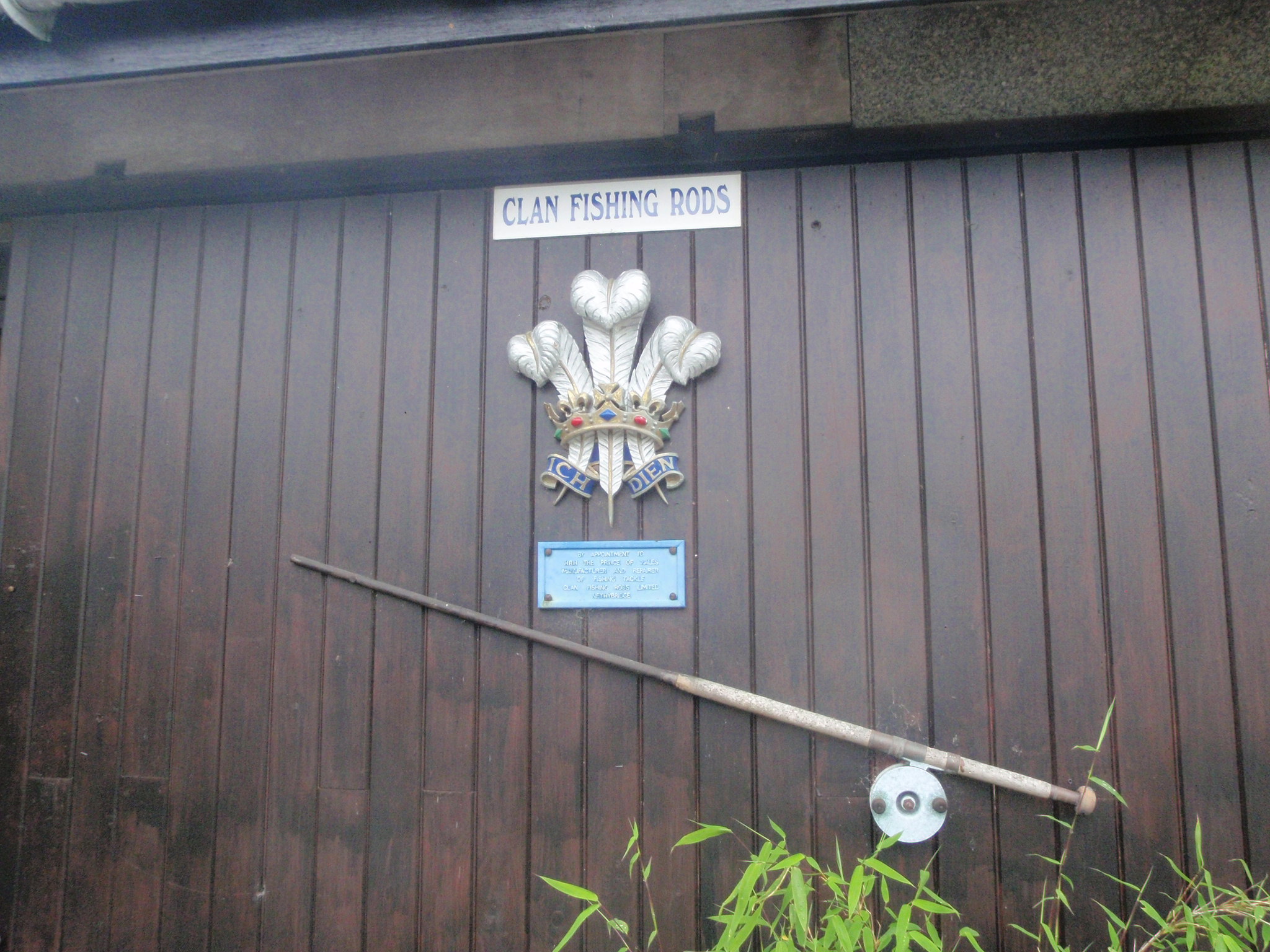
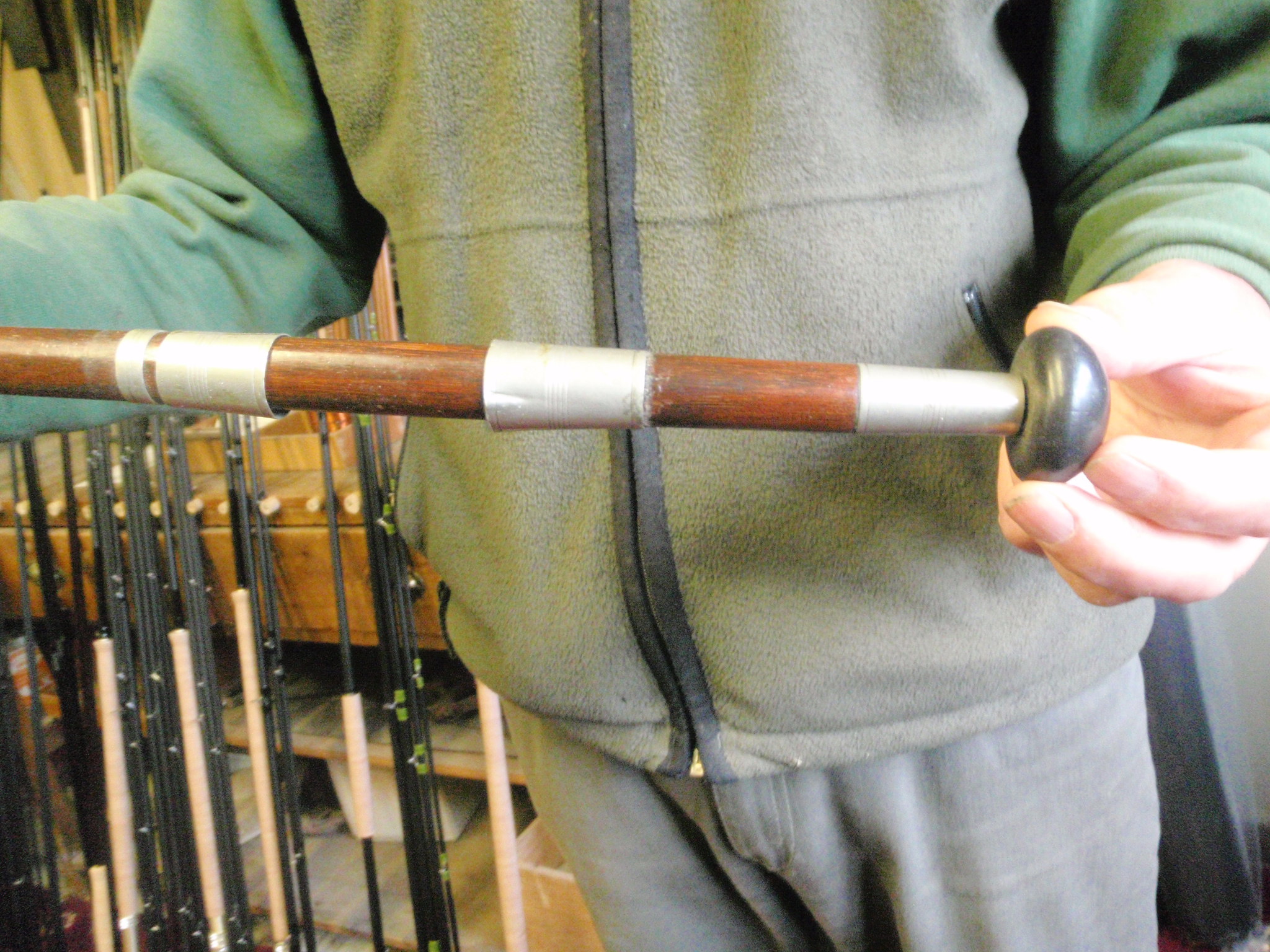
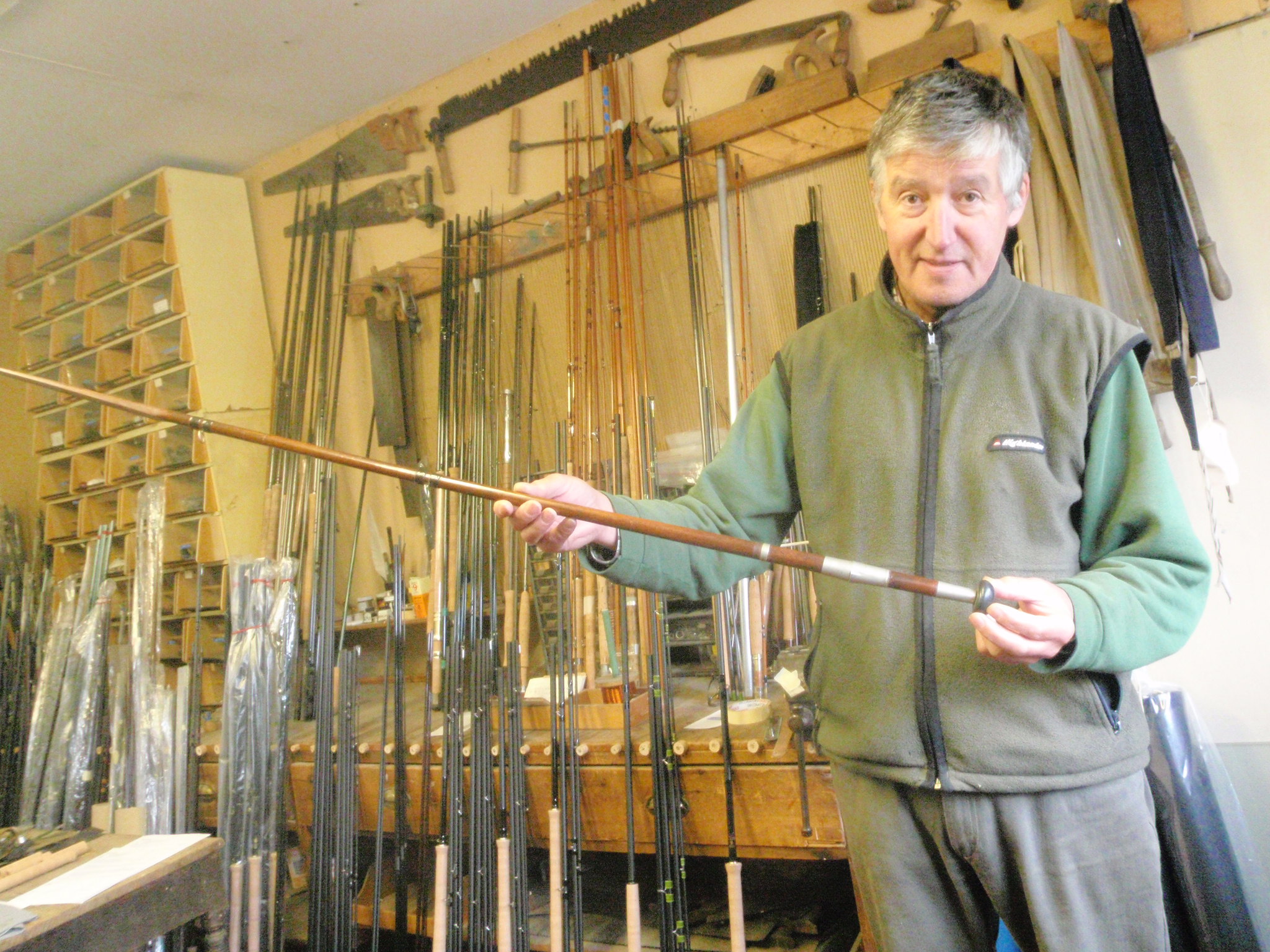
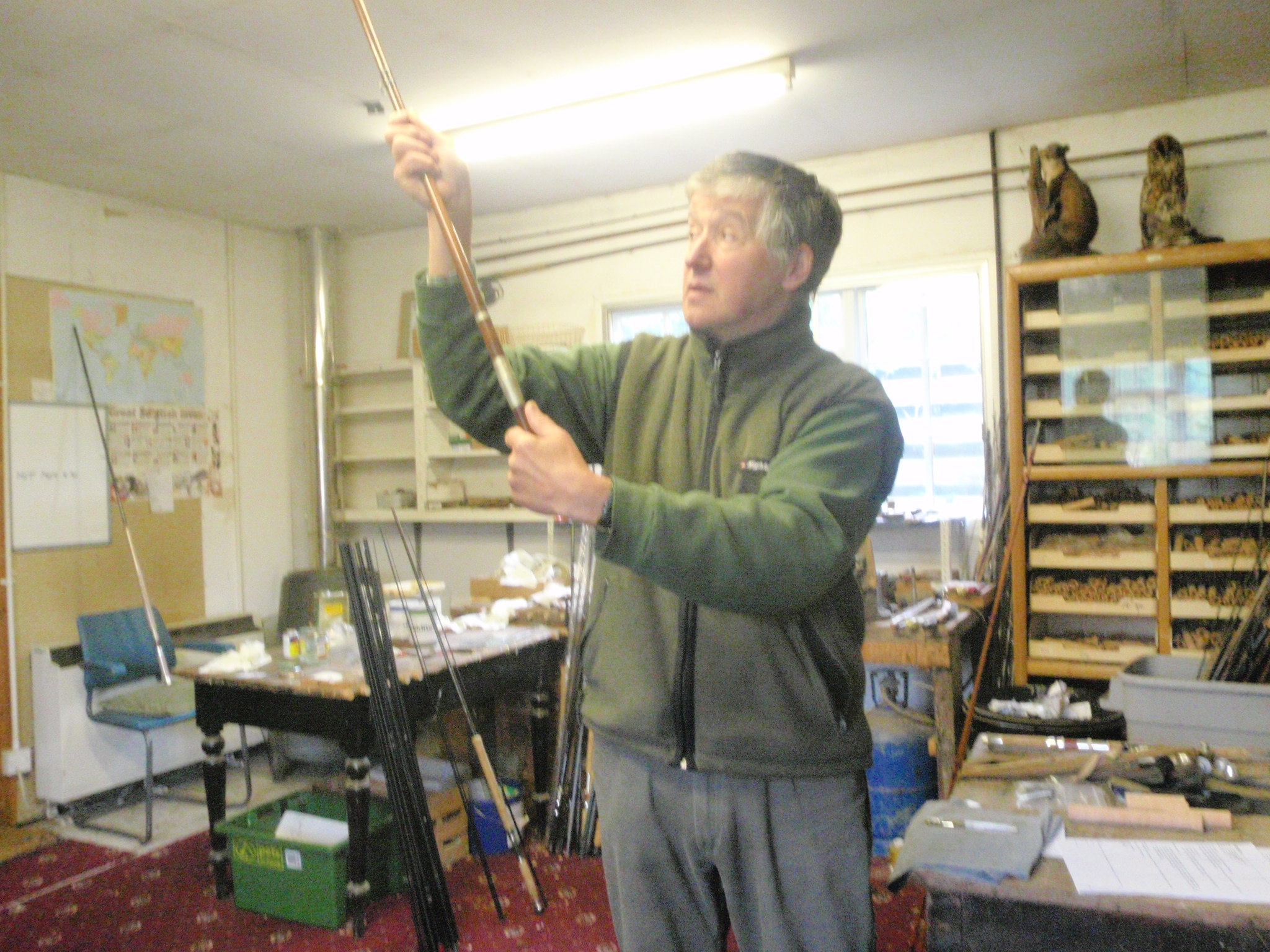
Alexander Grant ?
Last
year, I visited Mr. H. Jamieson, who is a master rod builder in Inverness shire,
His
company is one of two fly fishing companies, which are appointed to manufacture
and repair of the Prince of Wales fishing tackles.
He
showed me his Alexander Grant rod. The pictures are attached. Visit his
web site to know more about the Mr. Alexander Grant rod. http://www.clanrods.com/greenheart.htm
He can repair the Alexander Grant rod and now is making the modern spey
line to fit Mr. Grant casting concept.
Thanks Alley for your e-mail about Grand.
I
noticed in the bottom of the sketches of over head casting that his reel is
facing to the back as if he turned his rod toward back. Probably it is
related how the rod has been made for the best load.
Or if
you turn the rod, it is a bit longer passage than the straight move. It means
you can create the longer and faster movement of the rod tip just before the
stop.
Or is
it related to something about ?twisting? the rod?
Did
he ever turn to the back during the casting?
If
you know any, please let me know.
Thank
you in advance.
Tight
lines,
Misako Ishimura
~~~~~~~~~~~~~~~~~~~~~~~~~~~~~~~~~~~~~~~~~~~~~~~~~~~~~~~~~~~~
A TIGHT LOOP
~~~~~~~~~~~~~~~~~~~~~~~~~~~~~~~~~~~~~~~~~~~~~~~~~~~~~~~~~~~~~~~~~~~~~~~~~~~~~~~~~~~~~~~~~~~~~~~~
As many of you know, Mark Sedotti has astounded onlookers as he demonstrates his incredible "Sayonara Sling" distance cast. His tight loops are among the best I've seen. This from him :
Hi Gordy,
I don't consciously apply
ANY downward curve to my stroke at the end (Nor would I EVER teach this! -
people have a hard enough time getting a very tight loop consistently anyway -
why even have them think about an extra movement. It's excess - too much
unecessary thinking - except in a few cases) . I TRY to make the tip go
straight here, myself. But it doesn't happen. So the result is a very
tight loop. Maybe I've just worked it out this way over time, so it's
automatic.
As far as getting a tight loop. You REALLY don't
get that tip to move in a straight line for very long anyway. That tip is
bending upward (although often slightly) for most of the loading stroke. In
order to get a "straight casted line" it really only has to be moving straight
for a little bit at the end of the load (even an inch will do it) anyway. I
probably have it moving straight for a little more than that in my casts, if you
REALLY looked into it. Maybe a foot at most. Then it's straight for a little bit
of the unload. And then it comes (as we've discussed here) "down" a little bit.
So, what I teach is that if you want to cast a straight line, you have to get it
so that tip moves straight for AT LEAST a little at the end of the
load and during the entire load. Of course, again, it must come down a little
before the rod tip stops so that you HAVE a loop. Usually, you don't have to
think about this though. This is also how you cast in a desired direction
as well. That line must be moving not only in that direction for the unload but
must be travelling in that same direction for at least a LITTLE at the end
of the load as well.
Regards,
Mark
~~~~~~~~~~~~~~~~~~~~~~~~~~~~~~~~~~~~~~~~~~~~~~~~~~~~~~~~~~~~~~~~~~~~~~~~~~~~~~~~~~~~~~~~~~~~~~~~~~
Mark... This may explain why a tight loop is often achieved when Lefty tells his student to try to throw the line AT THE ROD TIP. G.
~~~~~~~~~~~~~~~~~~~~~~~~~~~~~~~~~~~~~~~~~~~~~~~~~~~~~~~~~~~~~~~~~~~~~~~~~~~~~~~~~~~~~~~~~~~~~~~~~~~
An Interesting Tailing Loop
~~~~~~~~~~~~~~~~~~~~~~~~~~~~~~~~~~~~~~~~~~~~~~~~~~~~~~~~~~~~~~~~~~~~~~~~~~~~~~~~~~~~~~~~~~~~~~~~~~
From Jim Chestnut :
Hi Gordy,
I have tried taking videos before, and my camera refuses to focus on the
fly line but focuses on me, or cars going by, or leaves fluttering
instead. Perhaps one of these days I will figure it out or get a better
(simpler) camera. I haven't had time to try any more lately.
Here is a link, however, to a bunch of photo's Lasse Karlson took of a
Paul Arden "tailing loop" cast which is the same cast I was referring to -
though Paul splashed the rod down into the river for some reason. His
intent, I think, was to demonstrate tailing loops.
But had he left the rod at RSP, he would have done the cast I was talking
about - though his cast was a bit underpowered for that. The pictures
were translated into stills by Lasse from a video and are very good, and
show the second loop forming very well, and chasing down the circle which
was the primary loop.
http://www.sexyloops.co.uk/cgi-bin/theboard_07/ikonboard.cgi?act=ST&f=3&t=11826&st=140#entry211848My comments after the pictures derailed the original question (ie. How can
an early dip cause a tail close to the caster?) onto whether a tailing
loop had to cross the line twice.
This was a very interesting discussion and there was no clear consensus of
opinion - though both Paul and Lasse maintain that late dips in the
casting stroke cause early tails. I, and a few others, disagree and
believe the opposite to be true.
Cheers,
Jim
~~~~~~~~~~~~~~~~~~~~~~~~~~~~~~~~~~~~~~~~~~~~~~~~~~~~~~~~~~~~~~~~~~~~~~~~~~~~~~~~~~~~~
Jim... That argument can be put to bed easily. If you do as Tom White did and learn to make tails close to you as well as way out at the leader you will have the answer.
What the caster does during the stroke affects the fly leg. What he does after the stroke affects the rod leg. That is the basis for the observation that when making mends (after RSP) the earlier you make the move the farther out from you it appears and vice versa. When making a tail (move made prior to RSP) just the opposite happens. The earlier the defect is formed, the closer to the caster and vice versa.
Gordy
~~~~~~~~~~~~~~~~~~~~~~~~~~~~~~~~~~~~~~~~~~~~~~~~~~~~~~~~~~~~~~~~~~~~~~~~~~~~~~~~~~~~~~~~
Attachment:
090615548.JPG
Description: JPEG image
Attachment:
090615574.JPG
Description: JPEG image
Attachment:
090615575.JPG
Description: JPEG image
Attachment:
090615576.JPG
Description: JPEG image