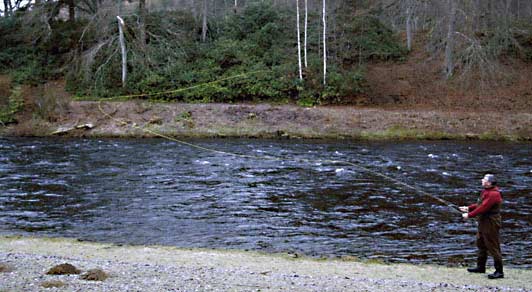
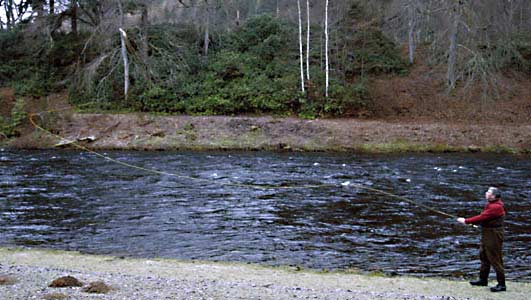
Walter & Group....
From Jim Valle:-
Gordy,
Ally and Group,
In
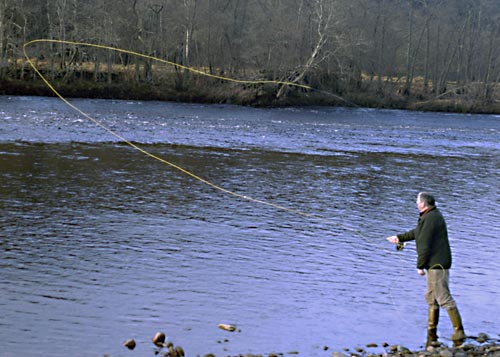
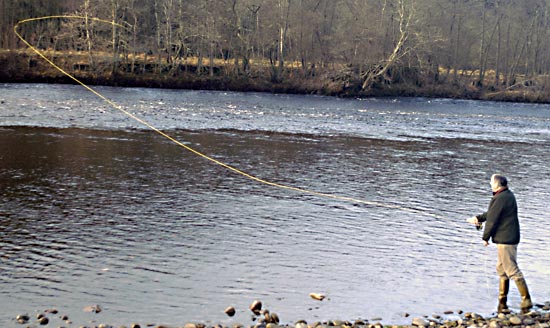
my humble opinion this is not a climbing loop in that the rod position is low
effectively pulling the rod leg down after the stop making the tip of the loop
appear higher. If you were to stop the rod at the forward stop position (or draw
it on the piecure) I believe the rod leg would be fairly level with the
loop point.
Ally’s
move is similar to the Molsen cast if line is slipped and shot while anchoring
the belly of the rod leg.
Jim
~~~~~~~~~~~~~~~~~~~~~~~~~~~~~~~~~~~~~~~~~~~~~~~~~~~~~~~~~~~~~~~~~~~~~~~~~~~~~~~~~~~~~~~~
Jim..... I remain simply uncertain as to whether that loop is the paradoxical rise from an almost horizontal trajectory.
~~~~~~~~~~~~~~~~~~~~~~~~~~~~~~~~~~~~~~~~~~~~~~~~~~~~~~~~~~~~~~~~~~~~~~~~~~~~~~~~~~~~~~~~
Ally seems to agree with Jim, although he had not (of course) seen Jim's comment ! :-
Hi
Gordy,
I like your description
“one which appears to defy gravity by rising from the horizontal trajectory in
which it had been aimed”. Very observant! Line Jim and others I do not believe
that a wedge of line travelling forward at shooting speed can generate
sufficient lift to defy gravity. When the top leg diminishes the centrifugal
force generated by the loop can exceed the drag + mass of the top leg and cause
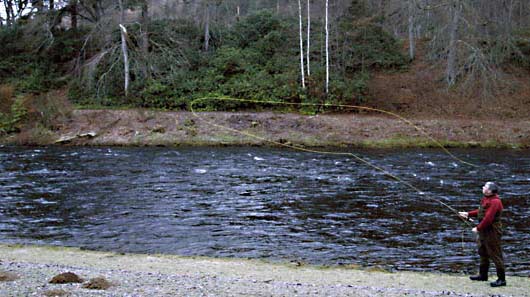
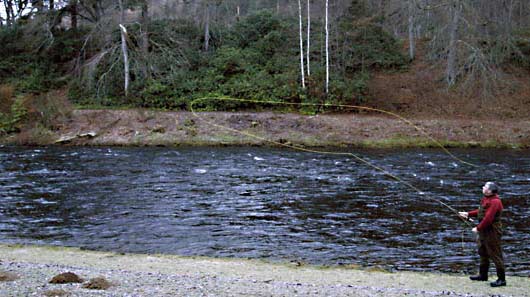
it to rise above the previously “stabilised” loop shape. The attached pictures
show a cast starting with back-cast (actually taken during the forward cast) and
sequentially through rloop1 to rloop4. The line appears to be rising but of
course it must fall due to gravity. The fact is that I am making a fairly high
(and hopefully horizontal) stroke and continuing with an early downward drift of
the rod whilst shooting line to cause the rod leg to appear as if it’s rising.
The line is indeed sloping above horizontal and the furthermost part of the rod
leg is higher than the rod tip but the situation is actually vice versa and the
rod tip has been pulled below the line. If you look at the picture “loop.jpg”
you will see what happens if I hold the rod in a “normal” higher position whilst
making a similar cast. Those who collect loop morphs will also be interested in
the difference between the shapes of rloop1 and rloop4. I made these casts with
a new T&T Apex 9ft #9 rod and an SA WF #9 line. I hope that the rod will be
useful if I ever manage to do some warm salt water fishing!
Suggest that you show
the group the rloop1 to rloop4 pictures to start with and ask the budding
masters to explain what is happening.
Best
wishes,
Ally Gowans
~~~~~~~~~~~~~~~~~~~~~~~~~~~~~~~~~~~~~~~~~~~~~~~~~~~~~~~~~~~~~~~~~~~~~~~~~~~~~~~~~~~~~~~~~~~~~~~~~~
Comment: Check out Ally's attachment photos. See if you can answer Ally's question as to what you think is happening.
Gordy
~~~~~~~~~~~~~~~~~~~~~~~~~~~~~~~~~~~~~~~~~~~~~~~~~~~~~~~~~~~~~~~~~~~~~~~~~~~~~~~~~~~~~~~~~~~~~~~~~~~~
Attachment:
rising_loop.jpg
Description: JPEG image
Attachment:
rising_loop2.jpg
Description: JPEG image
Attachment:
rloop2.jpg
Description: JPEG image
Attachment:
rloop2.jpg
Description: JPEG image
Attachment:
rloop3.jpg
Description: JPEG image
Attachment:
rloop4.jpg
Description: JPEG image